Margin Notes No. 005
Beyond the Masculinity Script
A way of seeing masculinity explored through Simone Rocha
Words: Khumoetsile Seamogano
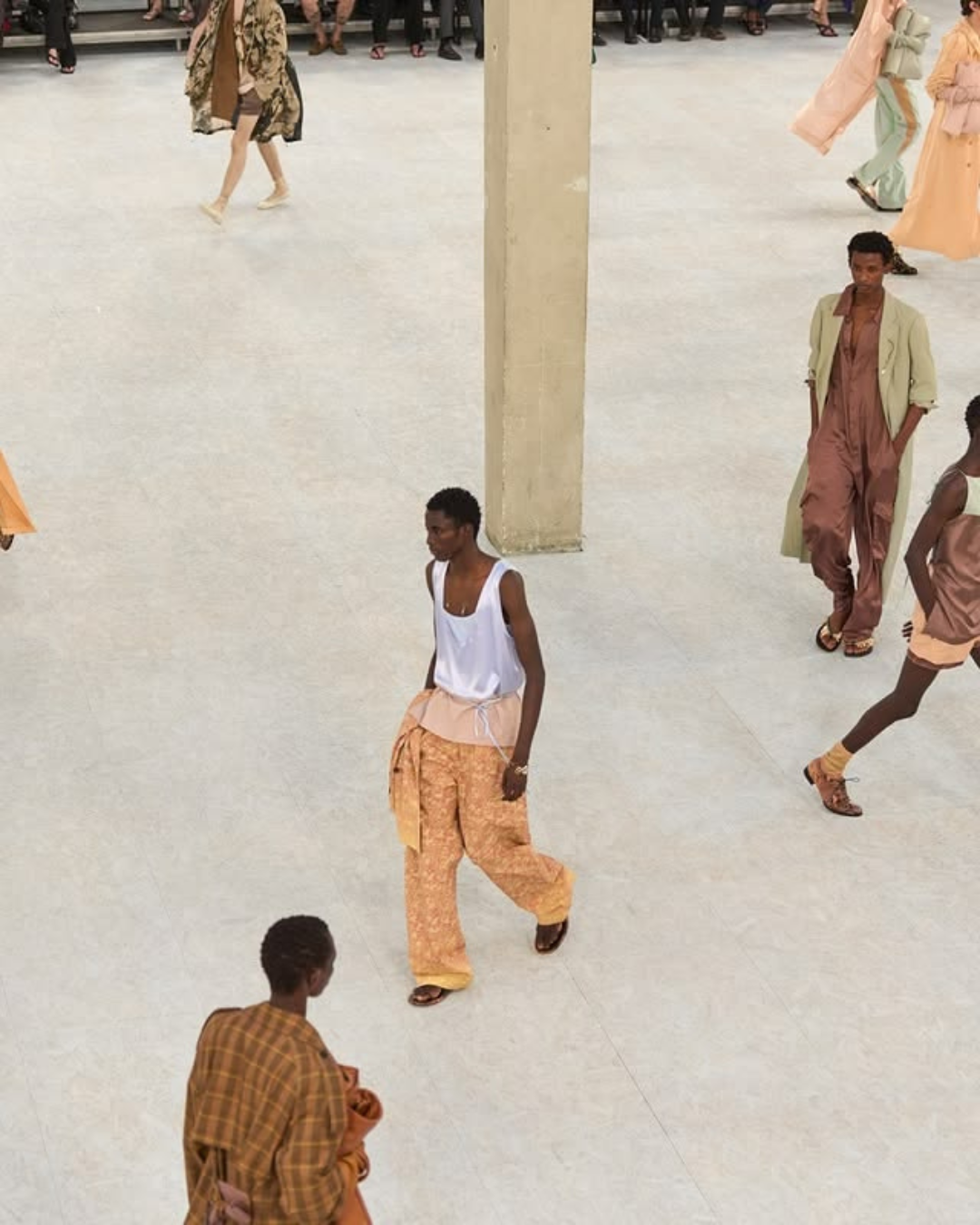
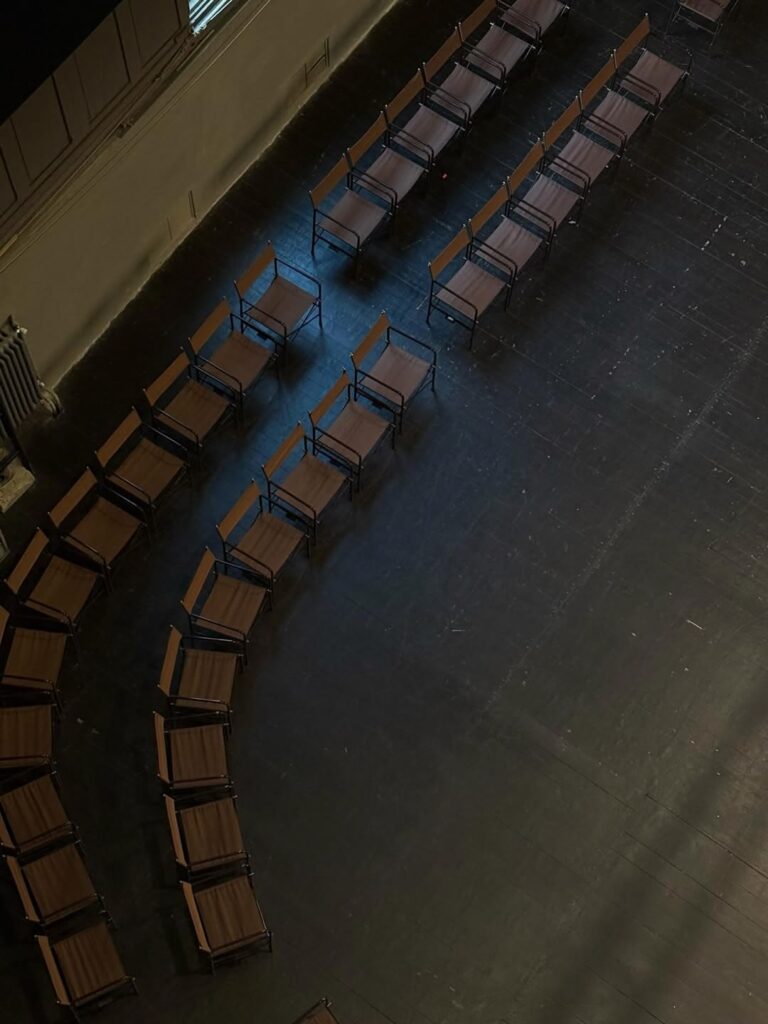
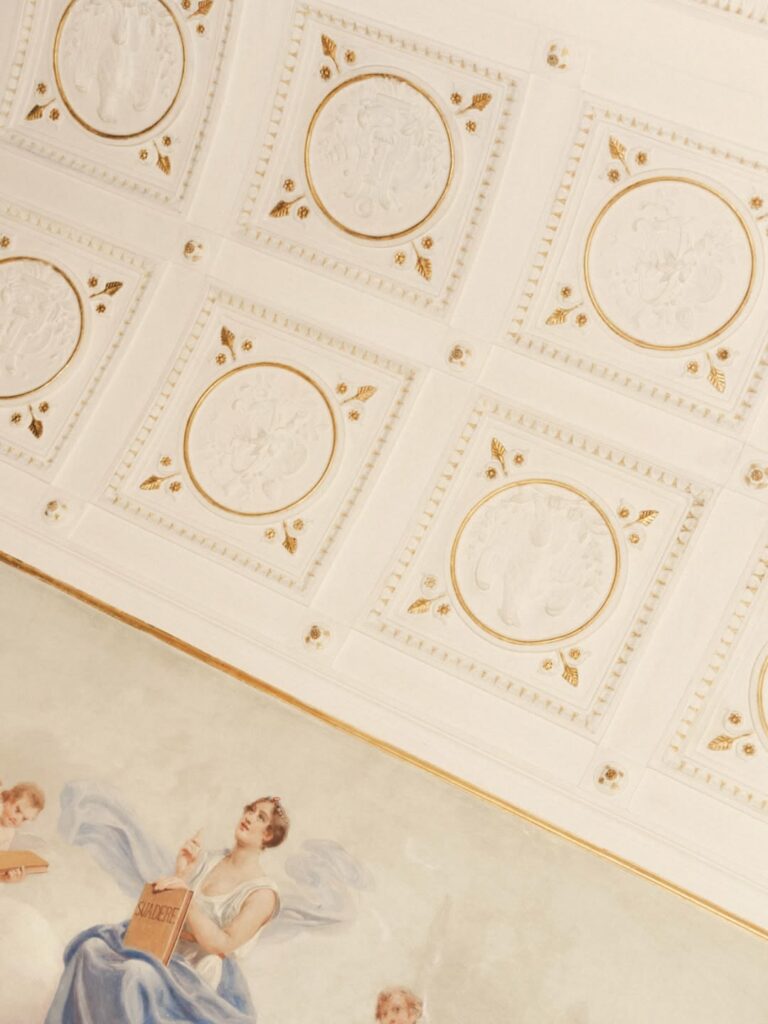
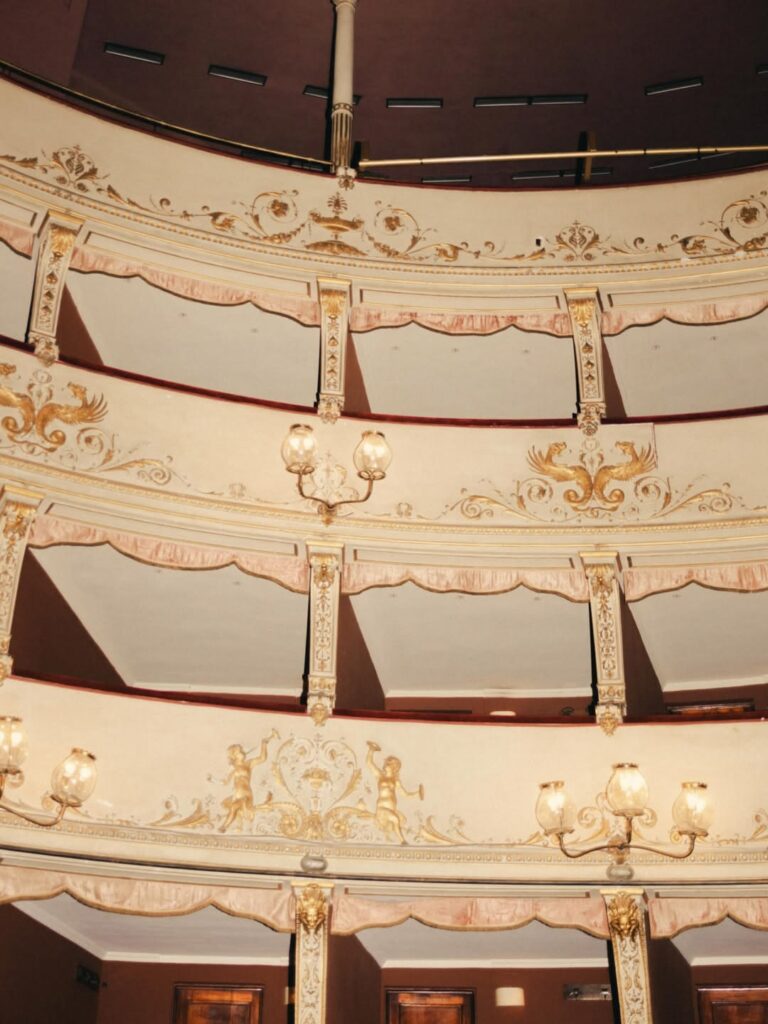
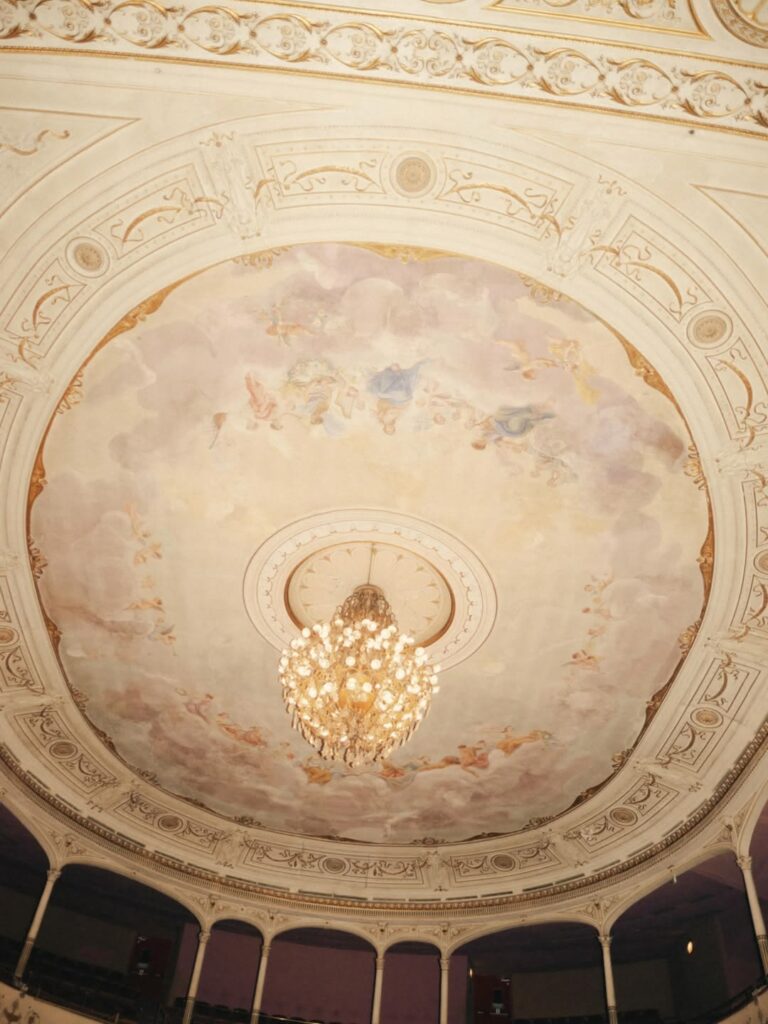
This year, Simone Rocha presented her first standalone menswear show at Pitti Uomo, staged within Florence’s Teatro della Pergola, one of Italy’s oldest opera houses. For centuries, its stage has held kings and fools, lovers and ghosts, heroes and martyrs; generations of characters whose stories have reflected, challenged, and reshaped the worlds beyond the theatre walls. There is perhaps no more fitting place to unveil Simone Rocha’s men, who arrive not as monuments of masculinity, but as characters in its expanding story.
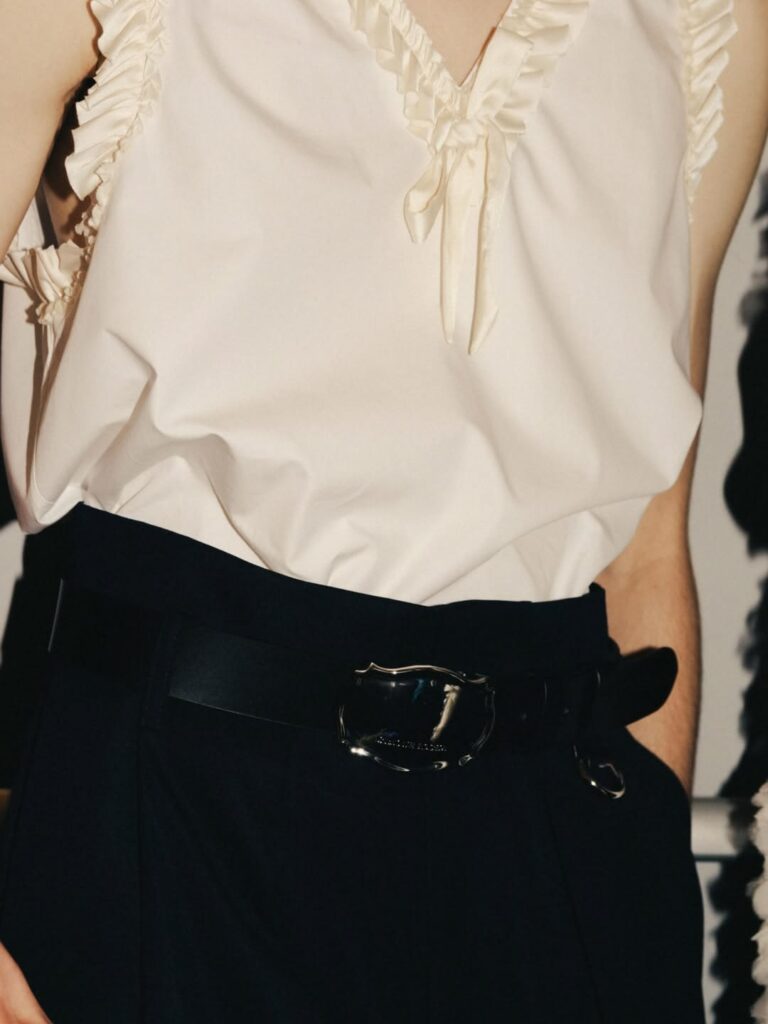
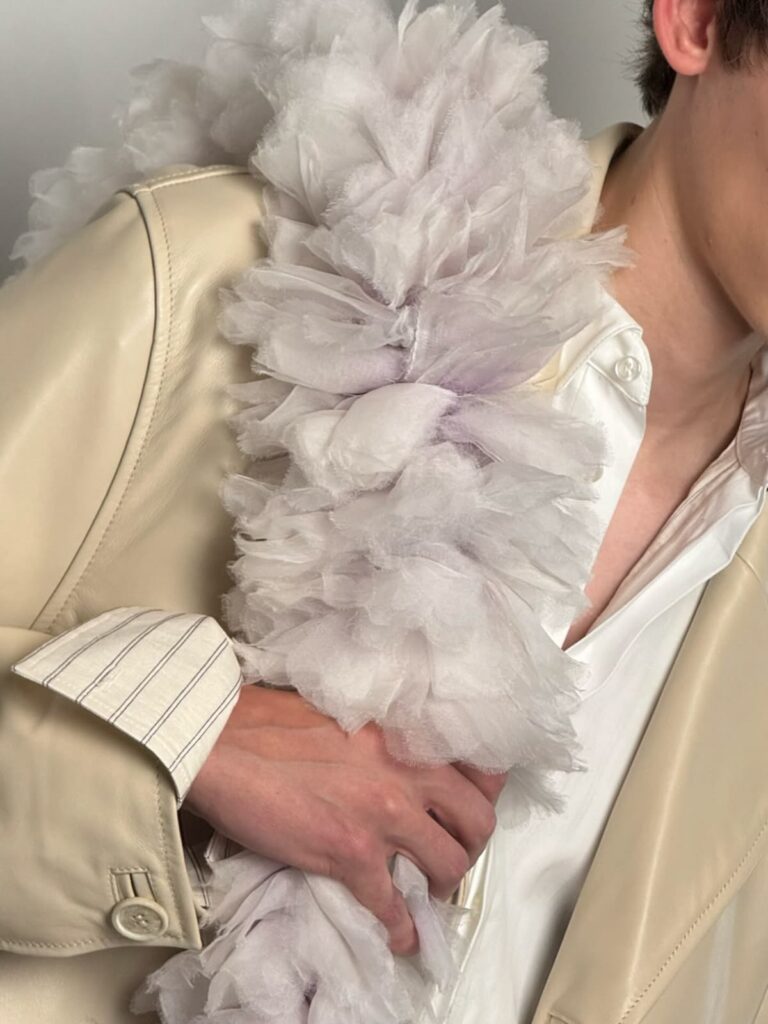
Described as a reflection on contemporary masculinity, the collection approached the classical menswear wardrobe through moments of sweetness: floral adornment, silk organza, feather boas, aprons, and pinafores. What appeared on the surface as ornament opened the door to a larger question: what other forms of masculinity become legible when tenderness is allowed to occupy the frame?
Across her collections, Simone Rocha has never seemed particularly interested in muses. She is interested in characters. Each season unfolds like another chapter in an ongoing novel, inhabited by figures who feel both ancient and strangely contemporary, as though they have wandered out of folklore and into the unsettled present. To look at her menswear, then, is to read it as literature as much as fashion. The garments become less objects of observation than doorways into the worlds, histories, and interior lives of the men who wear them.
To encounter these characters, however, is also to encounter the limits of the language available to describe them. At first glance, it is tempting to describe the collection as “soft boy aesthetic.” The instinct is understandable. It offers an immediate vocabulary for what appears before us: sweetness, ornament, tenderness. Yet the phrase reveals the limits of our own imagination more than the limits of Rocha’s. It quietly positions tenderness as adjacent to masculinity, rather than recognising it as one of its many expressions.
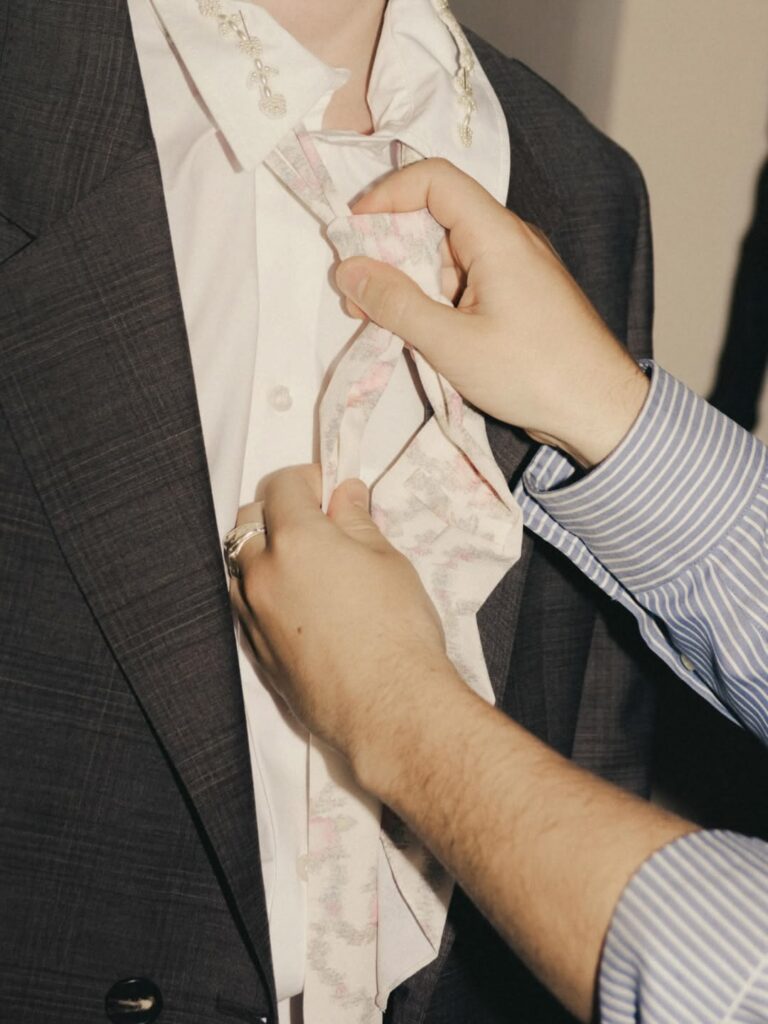
Images: Jacob Lillis
For centuries, the dominant masculine narratives of Western culture were largely written in two literary genres: epic and tragedy.
The warrior.
The patriarch.
The rebel.
The genius.
The martyr.
Even when a man changed his clothes, he remained bound to the same narrative architecture. His life was structured around conquest, achievement, failure, and sacrifice. The result was not simply a narrow idea of masculinity, but a narrow cast of masculine characters. Entire ways of being receded into the background until they became difficult to imagine.
A culture does not merely dictate what people wear. It quietly determines which lives become legible, which gestures appear ordinary, and which emotions can bleed into public life without explanation. When the same stories are repeated often enough, they begin to resemble nature rather than its construction.
Against this inherited framework, Simone Rocha treats the runway as civic theatre, presenting a man who is neither an abstraction of masculinity nor a revision of it. Each character arrives already embedded in the story that precedes him.
The man with the apron carries not only fabric, but a lineage of domestic labour reinterpreted as dignity. The man in softened silhouettes does not signal fragility, but proximity to beauty, presence, and grief. His clothes do not invent who he is. They reveal where life has touched him.
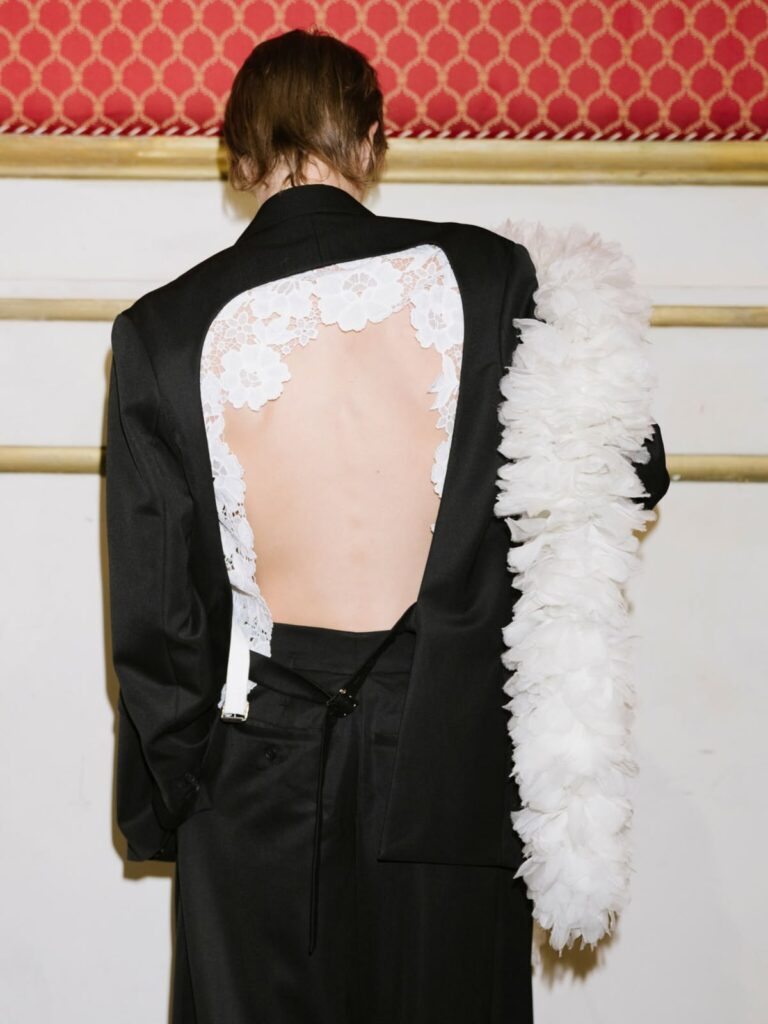
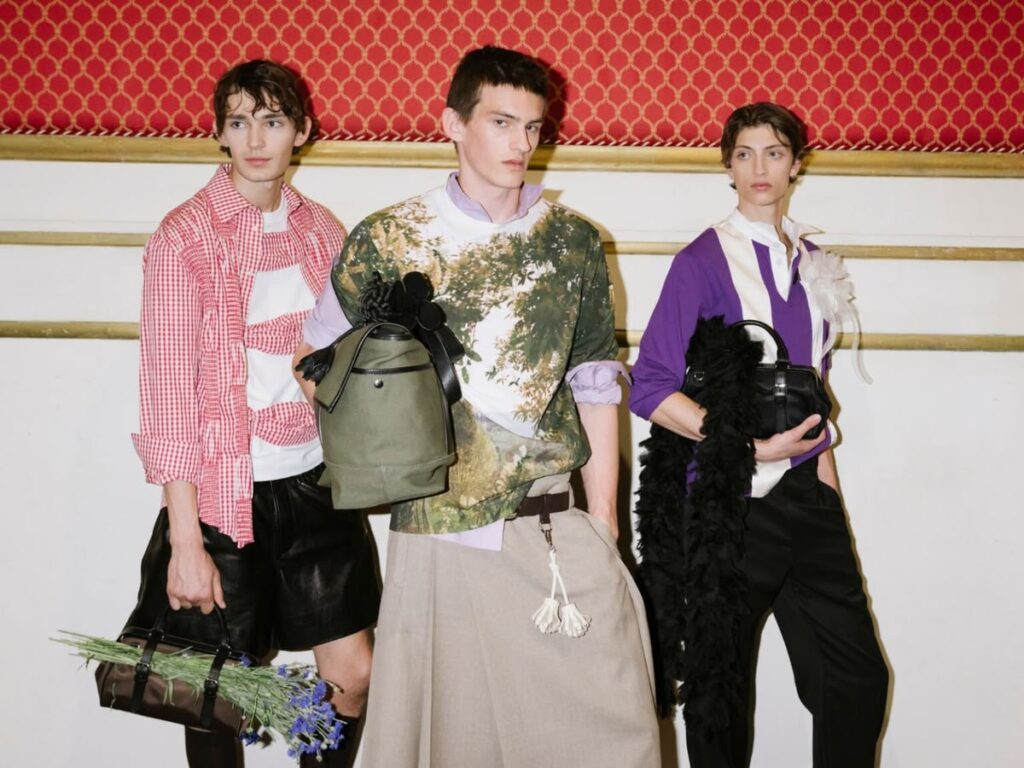
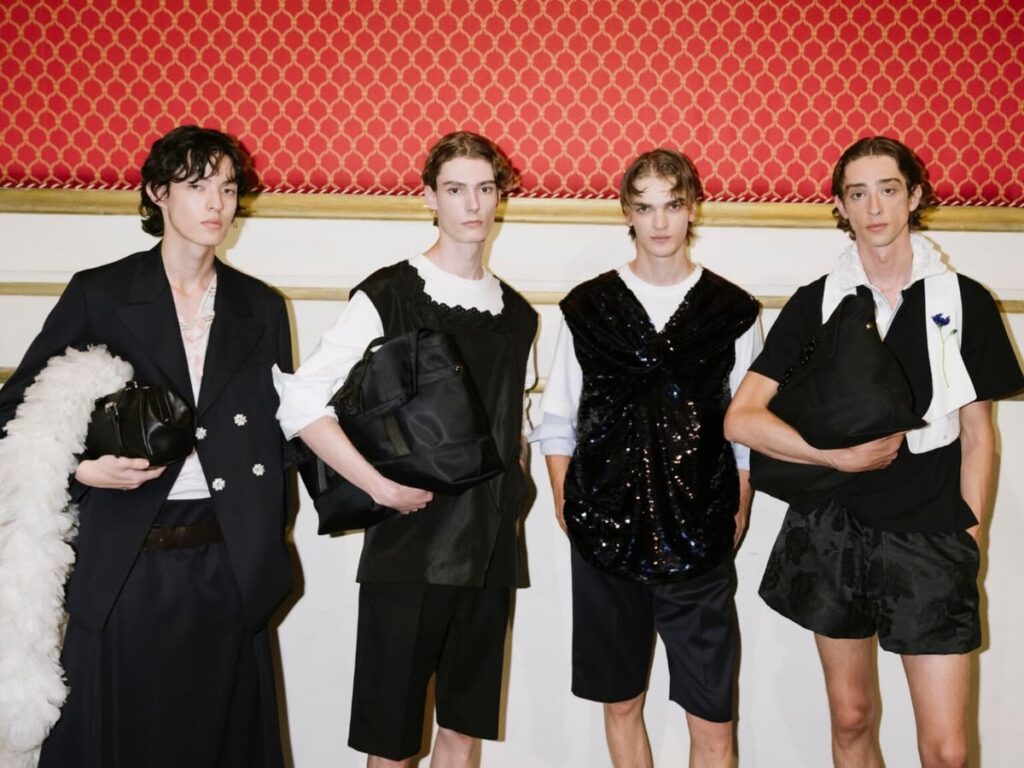
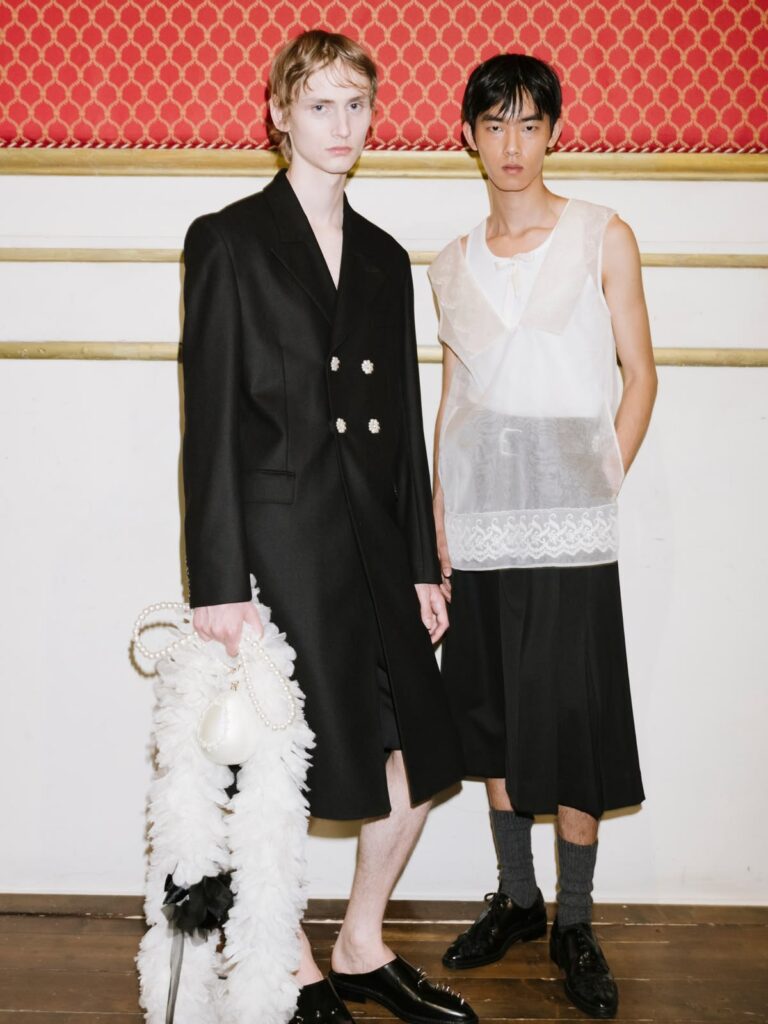
Images: Manifesto
When a culture becomes accustomed to only a handful of familiar archetypes, anything beyond them begins to appear peculiar, even suspect.
This is what makes Simone Rocha’s collection deceptively simple. Its power lies in its refusal to explain itself. The men on the runway are not speculative futures or political propositions. They are ordinary people whose lives have long unfolded beyond the narrow field through which masculinity has been read.
The gardener. The caretaker. The village eccentric. The boy who never relinquished his affection for beautiful things. They are not new inventions.
It is perhaps this certainty that unsettled so many viewers. The conversation following the collection quickly settled on eyelet bloomers, leather aprons, frills and florals, as though the garments themselves were responsible for disrupting a long-held understanding of masculinity.
The discomfort reveals something else. If a frill can be perceived as mockery, then masculinity has become so closely associated with emotional distance that any gesture toward tenderness appears incompatible with it.
The garment becomes the distraction. The real topic is the recognition of lives that have always existed beyond the dominant script.
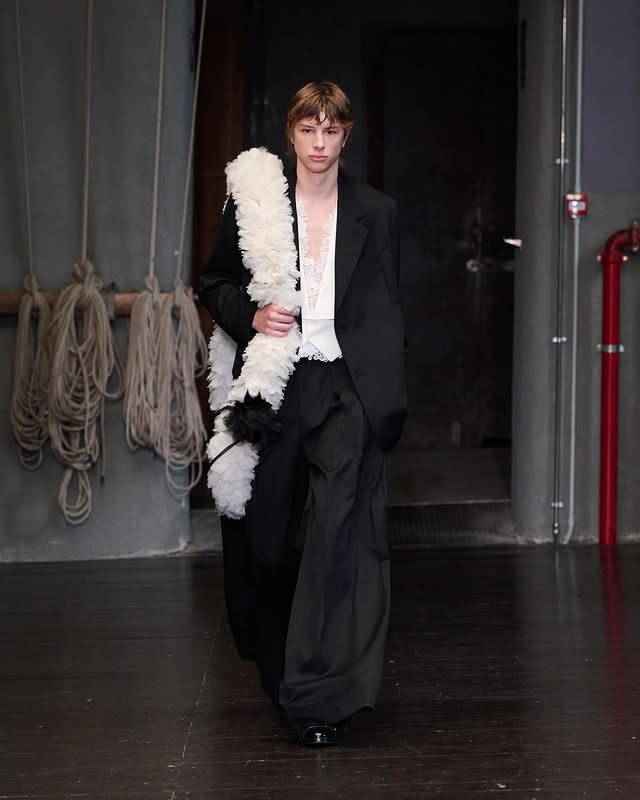
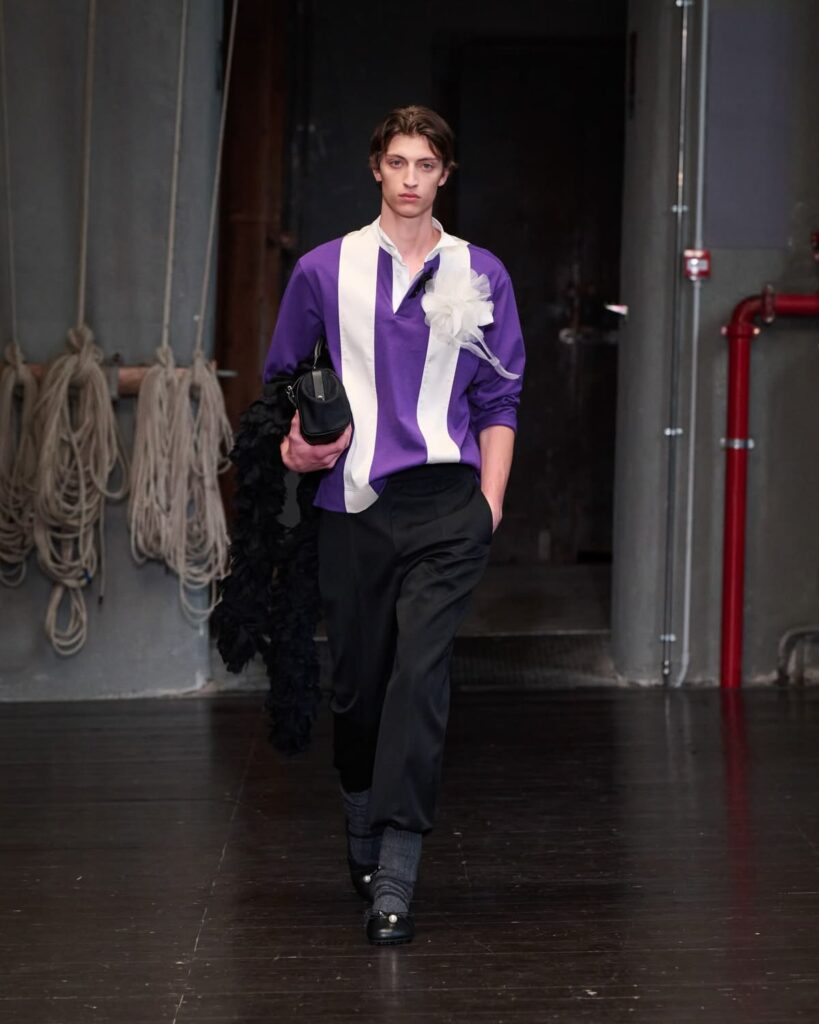
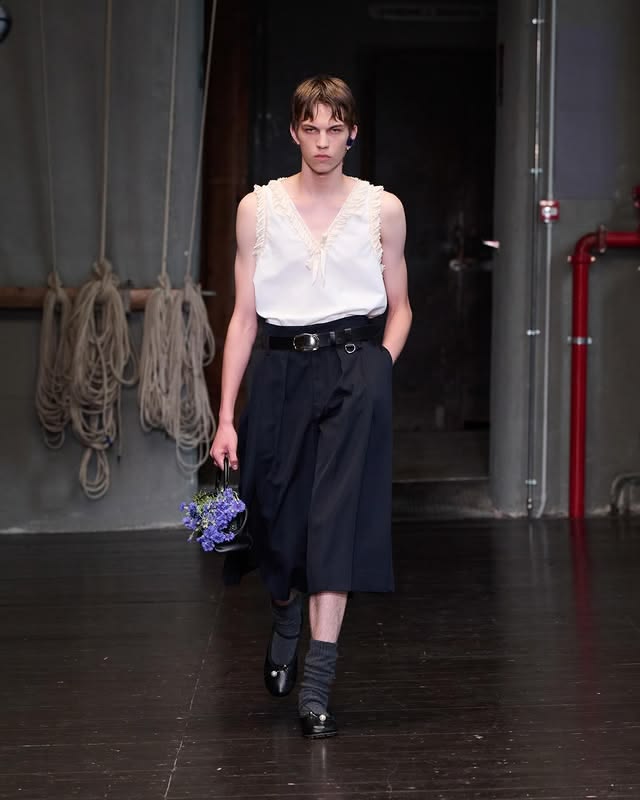
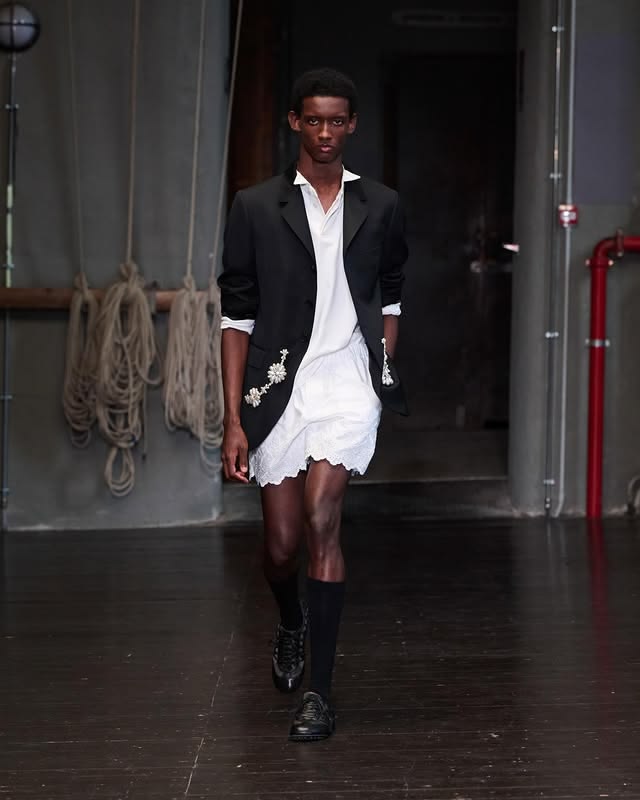
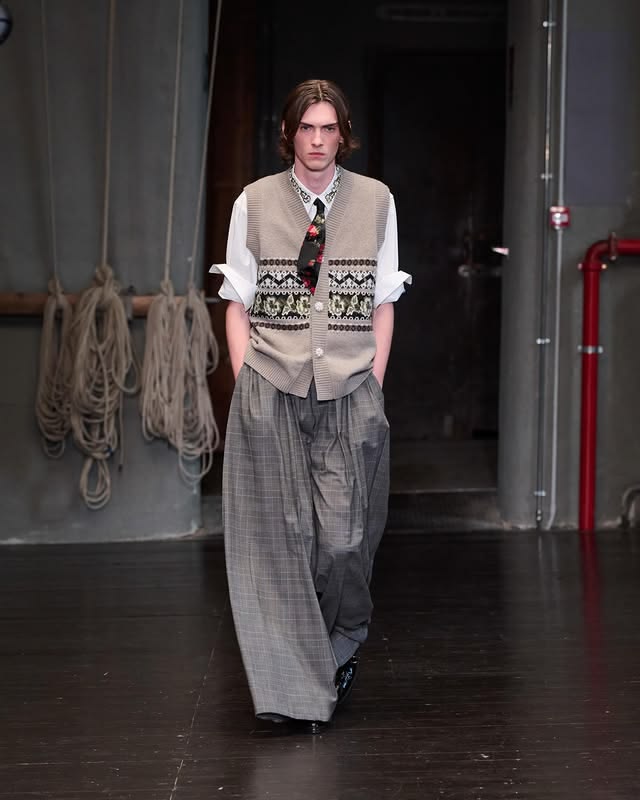
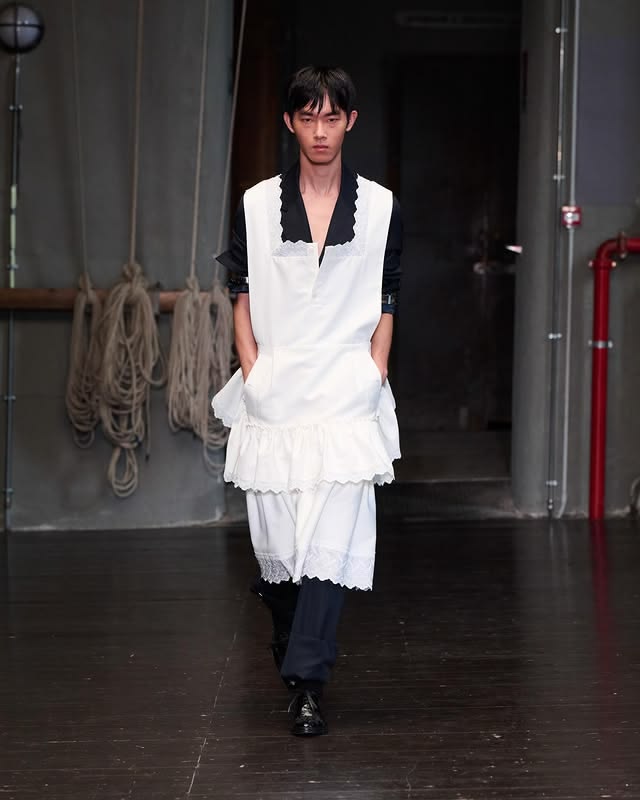
Images: Simone Rocha
What Simone Rocha stages is not another image of masculinity, but another way of recognising it. Her characters reveal that the broader field of masculine expression was never waiting to be invented. It was waiting to be recognised.
Art does not always invent new ways of being. Sometimes its greatest task is to bring to light what has always existed, to restore complexity where culture has over-simplified, and to give language to lives that have long moved through the world without being fully articulated.